Scaling Distributed Operations
Business Challenge
As the volume of digital work increased, managing a growing number of contributors required structured onboarding, consistent training, quality monitoring, and clear operational processes.
The main challenge was to scale the workforce without losing control over training quality and daily execution.
My Role
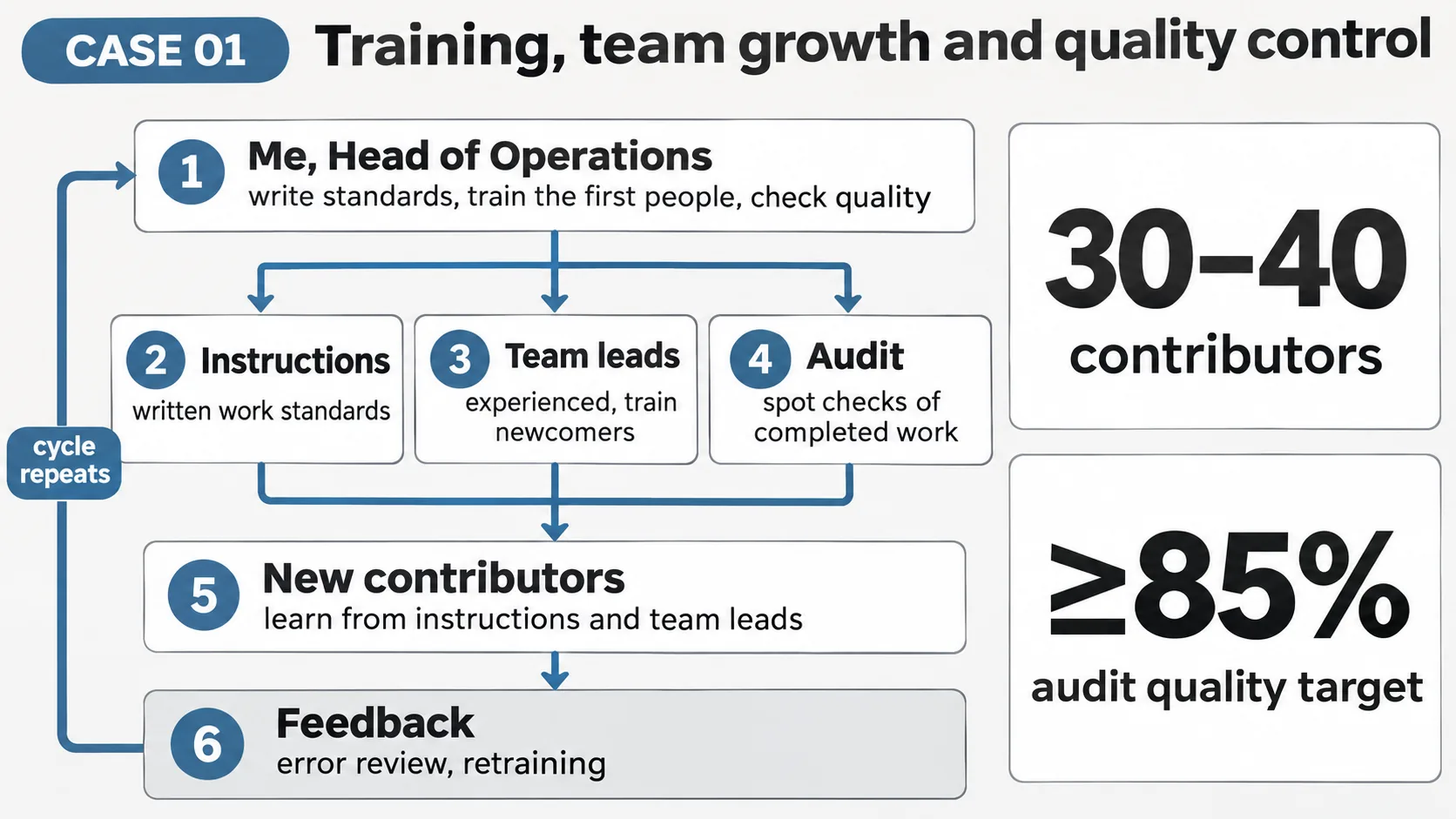
As the Operations Lead, I was responsible for organizing the workforce, training the initial contributors, providing working guidelines, monitoring performance, and resolving operational issues.
I personally trained the first contributors and established a train-the-trainer model as the team expanded.
From then on, team leads (experienced contributors who train newcomers) ran onboarding through live calls and practical sessions.
I provided the necessary working guidelines, received audit results for newly trained contributors, and personally communicated what needed to be corrected or improved.
This approach allowed training responsibilities to be distributed while I retained oversight of performance and quality.
Approach
- Personally trained the initial group of contributors.
- Established a scalable train-the-trainer approach.
- Delegated practical training to team leads (experienced contributors who train newcomers).
- Provided working guidelines and supporting materials.
- Reviewed audit results and identified performance issues.
- Delivered direct feedback to contributors requiring improvement.
- Coordinated workload distribution across multiple workstreams.
- Monitored productivity and quality requirements.
- Adjusted operational processes as the workforce expanded.
Workload Planning & Performance Control
As the team grew, I organized it into two levels so that daily issues were handled close to the work.
- An operations support unit of 5–7 people managed working accounts, access, testing, and payment settings.
- Each workstream team had its own team lead, with additional compensation for the management role; around 15 team leads held this role over time.
- One team member coordinated the training process.
I communicated process changes and new requirements to team leads, who cascaded them to their teams. Team leads resolved routine issues independently and escalated the rest to me.
I tracked performance for each contributor and each team on three measures:
- Hours worked, recorded in Toggl.
- Number of completed tasks.
- Quality, based on weekly audit scores and error reviews.
I used these measures to reallocate workload between teams. Low quality scores led to retraining; if problems continued, the contributor was removed from the project.
Outcome
Scaled operations from a small initial group to approximately 30–40 distributed contributors.
Established a repeatable onboarding and training process that reduced dependence on direct one-to-one training by the Operations Lead.
Maintained quality-control processes with audit performance targets of 85% or higher.